Condition 1 Combat Center Muay Thai Gym: Striking Foundations
@andrejzbq273
Muay Thai rewards honesty. Every punch, kick, knee, and elbow tells on you if your balance is off or your eyes wander. At Condition 1 Combat Center’s Muay Thai gym, the striking program is built to expose gaps gently at first, then relentlessly once you’re ready. The emphasis is on repeatable fundamentals that work under fatigue, pressure, and stress. If your goal is to build a clean base for stand-up striking that carries into MMA, boxing, or self defense, starting with these foundations will save years of backtracking.
What “foundations” means in Muay Thai
Foundations are not a beginner-only topic. They are the small things that scale as you climb. Think of them as structure, not syllabus. Good stance that supports quick direction changes, guard positions that protect the chin without blinding your vision, a jab that lands from multiple ranges, and a kick that returns to stance without dragging your hips behind. At the Condition 1 Combat Center muay thai gym, coaches teach these principles early and test them in pad rounds, partner drills, and eventually light technical sparring.
The core pillars look simple on paper: stance and rhythm, straight-line punching, round kick mechanics, knee and elbow structure, the clinch, and ring craft. But each pillar carries dozens of small, critical details. You learn when to shift your weight and when to float. You feel the difference between snapping the shin and swinging a heavy baseball bat. You learn to read lead foot position in the clinch before knees ever start flying.

How classes are structured for real skill transfer
Condition 1’s striking classes follow a format that breathes. Warmups prime the exact tissue and movement patterns you’ll need, rather than burning everyone out with aimless calisthenics. Expect jump rope or line-movement drills to set rhythm, then hip and ankle mobility to open the kicking chain. Technical blocks run 20 to 35 minutes where one idea gets developed progressively. Bag and pad rounds translate the idea under moderate output, and partner application finishes the loop.
Mixed-level sessions work because the coaches layer constraints. A new student might drill the rear round kick into a belly pad with an emphasis on chamber and return, while a more experienced partner adds a slip or counter feeder role. When it’s time for controlled sparring, beginners work touch-sparring at 30 to 40 percent under clear rules, such as jab-only or body-only, while advanced strikers can push pace with specific goals. The result is a floor where nobody is idle and everyone is accountable to a focus for the day.
You also see crossover with other programs. Condition 1 Combat Center runs an MMA gym environment where Muay Thai feeds directly into the larger game. When classes merge concepts, like defending the cage clinch or striking off level changes, the mechanics taught in Muay Thai show up intact. Fighters who split time in the Condition 1 Combat Center bjj gym learn to strike into clinch entries that set up body lock takedowns, then stand back up under pressure. The cross-pollination is deliberate.
Stance and footwork, the plain truth
A stable stance is a non-negotiable. At Condition 1, you’ll set feet just wider than shoulder width, rear heel light, knees relaxed, and hands where you can see them in your peripheral vision. That phrase, “see your hands without turning your head,” does more to clean up guards than a dozen verbal cues. Elbows track ribs, chin down but not jammed, and your weight hovers on the balls of the feet so you can spring, not stomp.
Footwork is taught with rhythm and angles, not just north-south shuffling. A simple step-and-replace drill, done for five minutes a day, cleans up defensive exits. Shadowboxing against imaginary ropes builds lateral awareness. One of my go-to cues: after every kick, test your stance by taking a small step in any direction. If the step is clumsy, your recovery needs work. When a class carries that habit to bag work, you can watch the room get sharper in a week.
The jab, the first true weapon
The jab introduces tempo control. Not every jab should look the same. Some touch and blind, some post and push, others snap and score. Early on, students add a small step with the lead foot to reach and retract. Coaches at the Condition 1 Combat Center muay thai gym encourage pairing the jab with head position changes: jab and roll, jab and pullback, jab and dip. That pairing builds defensive responsibility into offense.
I once watched a new student, already athletic, land hard crosses but get interrupted by counters every time. The fix wasn’t power. It was a busier jab that paved the way. By the end of the round, the cross started landing clean because the jab had changed the range and timing. One weapon made the other honest.
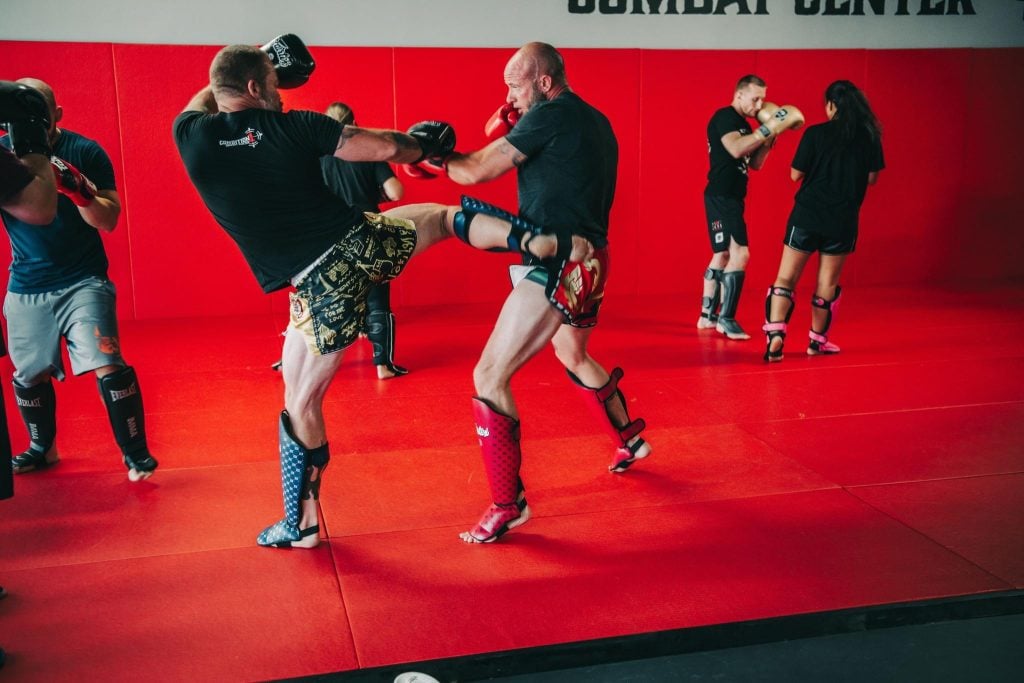
Round kick mechanics that carry power without strain
A clean Muay Thai round kick is rotational, not muscular. The hip turns, the shoulder dips slightly, the support foot pivots, and the shin lands as a heavy whip. At Condition 1 Combat Center, you’ll hear two consistent instructions: turn the hip and return to stance. New strikers tend to kick, admire the work, then drag the leg back late. That pause gets punished in sparring by a simple step-in right hand or check hook.
Good pads make a difference. In pad rounds, coaches cue for angle and height. When working the body kick, the pad holder sets the belly pad 2 to 4 inches off-center to meet the shin, not the foot. When targeting the leg, the holder flares the thigh and squares up so you learn the collision point that actually scores. Reps are kept in sets of 6 to 10 per side to preserve speed and crispness. As fatigue sets in, the first form cue to go is the pivot on the support foot. That’s where a coach will stop the room, reset the detail, and keep quality high.
Knees and elbows, short-range power without chaos
Knees and elbows are where many gyms either get too cautious or too reckless. Here, they are taught as structured tools with clear pathways. Knees come off the clinch or the post, not off-balance lunges. You start with straight knees into a belly pad, learning to lift the hip and snap the core while maintaining hand position on a collar tie. Then you add directional knees, turning your opponent onto the knee with a small foot pivot and shoulder press.
Elbows are vetted with high control. Students learn to rise with the elbow instead of swatting sideways in the air. The diagonal elbow climbs past the guard and returns to a safe shell. Air elbows get banned early, because people over-swing and lose balance. On pads, you practice elbow entries off a jab frame or a parry, then exit on an angle. That entry and exit discipline prevents bang-bang exchanges when sparring starts.
The clinch, balance first, damage later
Most Muay Thai fights turn on the clinch. Beginners want to throw knees immediately, then end up tipped over or stalled out. Condition 1’s approach is balance before damage. You learn inside position on biceps, collar ties that keep your forehead under your partner’s chin, and hip-to-hip control. Off-balancing drills focus on foot position, not just arm pulls. If your feet are square or your hips lag, you’re getting turned.
A favorite drill in the room: 30-second exchange where one partner hunts posture and position while the other resists at 40 percent, then swap. Neither throws strikes. The goal is to feel when posture breaks and hips align. Only after you win that battle do you add knees or elbows. Because the MMA gym at Condition 1 Combat Center serves mixed-rules athletes, you’ll also see fence work folded into clinch sessions, so transitions to body locks or underhooks make sense for MMA training.
Defense that survives pressure
Defense in Muay Thai looks different from boxing defense alone. You still slip and roll, but high kicks and knees change the picture. The defensive shell is built around a sturdy guard, parries that move just enough, and checks that meet the kick with the upper shin. Blocking body kicks with forearms is taught, but not as a habit, because it taxes the arms and opens the liver if your elbow flares.
Kick defense gets its own attention. Checking is effective but costly if mistimed. Catching kicks can swing a round, provided you don’t catch without a plan. At Condition 1, the rule is simple: catch, step, hit, or sweep, then reset. No hero holds. You drill the sequence with a cooperative partner, then layer speed. In sparring, both players know that caught kicks come with a light off-balance, not a full dump, unless it’s a clinch-only round where sweeps are on.
How striking integrates with MMA, BJJ, and boxing at Condition 1
A gym that offers MMA training has to reconcile different rule sets. The same stance that eats leg kicks in Muay Thai might be too square for wrestling entries. Coaches at Condition 1 Combat Center adjust details by context. When you’re in the MMA striking class, the stance narrows a touch and the lead hand drops a notch to help with underhooks and level changes. When you walk into the boxing gym sessions, the head movement and shoulder rolls get more time, and kicks are shelved. The bjj gym work influences how you exit clinches and avoid giving up your back in scrambles.
That cross-discipline awareness is helpful for self defense classes as well. A clean teep can end an altercation by creating space long enough to disengage. A collar tie and knee that is safe under kickboxing rules may not be safe when weapons or multiple attackers are a possibility. The staff at Condition 1 Combat Center makes those distinctions clear, so students don’t confuse ring-safe habits with street-safe decisions.
Drills that build strong habits
You can train for years and not get better if your drills are sloppy. Good drills have constraints and clear success criteria. Here are examples I return to when building striking foundations at the Condition 1 Combat Center muay thai gym:
- Teep targeting ladder: start at belly pad, then solar plexus, then hip crease. Ten reps each per side, two sets. Goal: control distance without leaning.
- Three-count kick return: kick, check, reset. Partners call the check side. Focus is on fast stance recovery after the kick.
- Jab touch, cross score: jab at 30 percent to the glove target, cross at 60 percent to a belly pad. Teaches tempo variation and range setting.
- Clinch pummeling to knees: 20 seconds of hand fighting to inside position, two straight knees, re-pummel. Builds discipline before strikes.
- Eye discipline rounds: spar with 50 percent power, but count out loud every time you see the shoulder twitch before a punch. Forces visual reads under stress.
Each drill reinforces control, not just output. Coaches prefer shorter work sets, typically 60 to 90 seconds, with equal rest for beginners. The point is crisp reps, not exhaustion. Later rounds add fatigue on purpose, because technique under a tired mind is where fights are won.
Common mistakes and how coaches fix them
Beginners share the same pitfalls regardless of background. At Condition 1 Combat Center, the corrections show up early.
- Heel-heavy stance: the fix is jump rope with quiet heels, then shadowbox while whispering “light feet” on each reset.
- Dropping hands on the exit: partner holds a pool noodle or foam stick and taps when hands fall. Ten taps equals ten pushups, habit cured.
- Kicking with the foot: roundhouse to a Thai pad that starts low. The pad holder lifts the pad a touch and you aim shin to target, not toe to pad.
- Over-slipping: slip to see the punch miss, not to hide from it. Coach sets a line on the mirror and you keep your eyebrow on the far side, not the ear.
- Clinch panic: hold for three seconds before doing anything. Learn to breathe, place your forehead, then act.
These are small anchors that stick. They are also measurable, which helps students track progress. You can feel the difference in a week when your stance stays light and your hands stay home on exits.
Sparring done responsibly
Sparring is not a rite of passage, it’s a laboratory. At Condition 1, new students earn sparring through consistent attendance, clean technique in partner drills, and respect for safety rules. When they start, it’s technical sparring with limits: jab-only, body-only, kicks-only, or clinch-only. This keeps the pace manageable and the focus controlled. Power is capped at a level where both partners can answer questions after the round. If you can’t remember the exchanges, the pace was too high.
Coaches float and intervene constantly. You’ll hear calls like “range check” or “reset and breathe,” which are cues to re-center. Fighters logging rounds for competition will have separate windows to increase intensity and target specific problems. Hobbyists stay safe while getting the same quality of coaching. The point is to leave better than you entered, not to win practice.
Conditioning without junk volume
Conditioning is specific. Endless burpees won’t save a tired lead leg in round three. The Muay Thai program uses intervals that mimic fight demands: bursts of 10 to 20 seconds of explosive work, then longer periods of steady output while maintaining form. A example block: 3 sets of 90 seconds on the bag at a steady 60 percent, with 10-second flurries every 30 seconds. Between sets, you hit 15 controlled jump knees on the heavy bag, focusing on knee height and hip drive.
For legs and hips, step-downs, Copenhagen planks, and calf raises support the kicking chain. For the trunk, anti-rotation and rotational power get equal time. You’ll spend time with slams and throws that teach how to use the hips without cranking the low back. Two days a week of targeted strength keeps joints resilient. The intent is to make the body durable and the engine match the sport.
Recovery, pacing, and longevity
The gym culture matters as much as the programming. At Condition 1 Combat Center, coaches nudge students to pace weeks intelligently. New members often want to train six days out of the gate, then hit a wall. A sustainable approach looks like three to four Muay Thai sessions per week for the first month, adding an MMA training day or a boxing gym session only when your shins, hips, and shoulders prove they can recover. Sleep and nutrition are treated like training partners, not afterthoughts. Bruised shins are normal; constant swelling is not. Kinesio tape is less useful than a day off and a light flush on the bike.
One practical tactic: keep a small notebook or app log with three lines after each class. What felt sharp, what fell apart under fatigue, and one rule for the next session. This tiny loop of review keeps you honest and helps the coaching staff tailor feedback. When you show a coach that you’re tracking your own patterns, the guidance gets sharper.
Building a week that fits real life
A strong week balances technical learning, power practice, and rest. It also respects job, family, and sleep. Here’s a sample week that many students at the muay thai gym fit around busy schedules:
- Monday: Muay Thai technique class, focus on jab entries and teeps. Light bag rounds to reinforce. 10 minutes of mobility after.
- Tuesday: Strength session 45 minutes, then boxing fundamentals or mitts work to clean hands without shin stress.
- Wednesday: Muay Thai class with pad rounds, add controlled clinch pummeling. Optional 20-minute steady-state cardio.
- Friday: Muay Thai technical sparring, kick defense focus. Keep power at 40 percent and review between rounds.
- Saturday: MMA training session to integrate entries or a bjj gym class to build grappling ties. Finish with 15 minutes of shadowboxing to preserve rhythm.
Swap days as needed. If you pick up a knock, replace impact with footwork and shadowboxing. Consistency beats hero weeks.
Selecting gear that supports your training
Start with the basics and upgrade as your rounds get longer. Gloves should fit snug, with enough padding to protect both you and your partner. Most adults settle on 14 to 16 ounces for partner work. Shin guards that cover the ridge without rolling are worth the price. A mouthguard you forget is in your mouth is the right one. If you plan to clinch often, a breathable headgear with open cheeks helps in early rounds without blinding your vision.
Pad holders matter too. If you buy Thai pads for home practice, choose a pair that is not overly wide at the wrist so your partner can angle them correctly. Belly pads that sit low on the hips help teach body kick accuracy. On the gym floor, you’ll learn to hold pads responsibly before loading up your partner’s power. A good holder is part coach, part training partner.
How Condition 1 supports different goals
Not everyone walks in wanting to fight. Some want sharper hands for fitness. Others want real self defense classes with clean, legal answers for ugly situations. The staff adjusts without diluting standards. If you are drawn to the MMA gym side of the house, your pad rounds will start including sprawls, cage awareness, and punch-to-shot transitions. If you live in the bjj gym and want strike defense while closing distance, you’ll get drills that respect your grappling instincts. If boxing is your interest, the boxing gym sessions isolate hands, head movement, and ring craft that sharpen your stand-up without kicking volume.
Condition 1 Combat Center also keeps an eye on how information reaches you. The website, condition1combat.com, outlines class schedules and program descriptions clearly. But the real value is how those programs talk to each other on the mat. You see the shared language when an MMA training session borrows Muay Thai frames to defend elbows on the break, or when brazilian jiu jitsu training time includes posture drills that mirror clinch control. That coherence makes progress feel linear instead of scattered.
Coaching standards you can feel in the room
A good coach sees the flaw before you feel it. A great one explains it in a way your body understands. The Muay Thai coaches at Condition 1 vary their cues. Some are tactile. You might get a tap on the back foot to remind you to pivot. Others use metaphors. I heard one tell a student to “zip the jacket” to close the elbows to ribs, and the guard cleaned up in a minute. Corrections are narrow instead of global, which keeps students from freezing.
Rounds are purposeful. If the class objective is teep distance control, you won’t see wild hand brawls pass unchecked. If the focus is clinch balance, knees get paused so position can be corrected. This discipline is how a room stays safe and grows quickly, whether you are eyeing your first smokers or sharpening tools for an upcoming amateur event.
A few hard-won tips for faster progress
Results come from small, repeatable habits. Here are practices that consistently move students forward at the Condition 1 Combat Center muay thai gym:
- Shadowbox daily for five minutes, barefoot if safe. Work one focus only, like the rear kick return or jab rhythm. Quality over volume.
- Film one round a week. Watch once with no sound for body language, then again for hands and feet. Note one fix, not five.
- Learn to hold pads well. You’ll feel timing from the other side and read strikes better on defense.
- Ask one question after each class. Specific beats vague. “How can I stop leaning on my teep?” gets more useful feedback than “How was I?”
- Stretch calves and hips nightly for three minutes. Kicks and checks rely on simple ranges you can build at home.
These small investments compound. When routines turn into reflex, sparring becomes calmer and you start solving problems in real time.
Why striking foundations at Condition 1 stay with you
A strong base in Muay Thai changes how you move in every combat sport. Clean footwork translates to better angles in boxing and safer entries in grappling. A disciplined guard makes self defense decisions clearer. Conditioning that matches the sport makes late rounds less frantic. At the MMA gym inside Condition 1 Combat Center, these benefits stack because the curriculum keeps the language consistent. You are not learning ten playbooks. You are deepening one.
If you are considering a start, you do not need perfect fitness or visit website flexibility. You need consistency, humility, and shoes you can leave at the door. The rest is teachable. The bags will take their share of your sweat, the pads will bite a little until your shins adapt, and your timing will feel clumsy before it feels smooth. That is the cost of real skill, and it is worth paying.
Muay Thai is honest work. Condition 1 Combat Center treats it that way, with coaching that respects the craft, training partners who value safety and quality, and a program that turns foundations into durable, fight-ready skills. Whether you are at condition1combat.com looking at class times or walking past the ring on a weekday evening, the message is the same: build the base, then build everything else on top.